Podcast Studio vs DIY: What Inland Empire Founders Should Pick
Date:
Category:
The microphone arrived, the software is installed, and the first recording sounded fine in your headphones. Then you listened on a phone speaker and heard the air conditioning, the room echo and the neighbour\'s dog.
The microphone arrived, the software is installed, and the first recording sounded fine in your headphones. Then you listened on a phone speaker and heard the air conditioning, the room echo and the neighbour’s dog.
This is the point where most business owners start looking at studios. Sometimes that is the right move and sometimes it is an expensive way to solve a problem a blanket would have fixed. Here is how to tell which situation you are in.
What Actually Makes Audio Sound Bad
Almost nobody has a microphone problem. They have a room problem.Paid advertising interrupts someone who was doing something else and asks for action immediately. The feedback loop is same day.
Sound reflects off hard parallel surfaces. Bare walls, windows, tile floors and empty rooms produce echo that no amount of editing fully removes. A cheap microphone in a treated room beats an expensive microphone in a kitchen every time.A podcast does the opposite. Someone chooses to spend forty minutes with you, forms an impression, and does nothing at all. Then months later they need what you sell and you are the only person in the category they feel they know.
Background noise is the second issue and it is worse than people realise. Air conditioning, refrigerators, traffic and computer fans all sit under the recording and become obvious once the audio is compressed for streaming.
If your recordings sound hollow or distant, the fix is soft furnishings, curtains, a rug and getting closer to the microphone. Not new equipment.
When DIY Is Genuinely Enough
Solo recording is where DIY performs best. One person, one microphone, a treated corner and consistent technique produces perfectly publishable audio.
Remote interviews also suit DIY, because each participant records locally and the files are combined afterwards. The quality ceiling is set by the worst participant’s setup rather than by your room.
Testing a format suits DIY too. If you are not sure whether you want a podcast at all, spending money on studio time before you know the answer is premature.
And if the show is genuinely low stakes, an internal update or a small niche audience, the production standard matters far less than consistency does.The measurable thing at this stage is consistency. Did you publish on schedule? Nothing else matters yet.
When a Studio Earns Its Cost
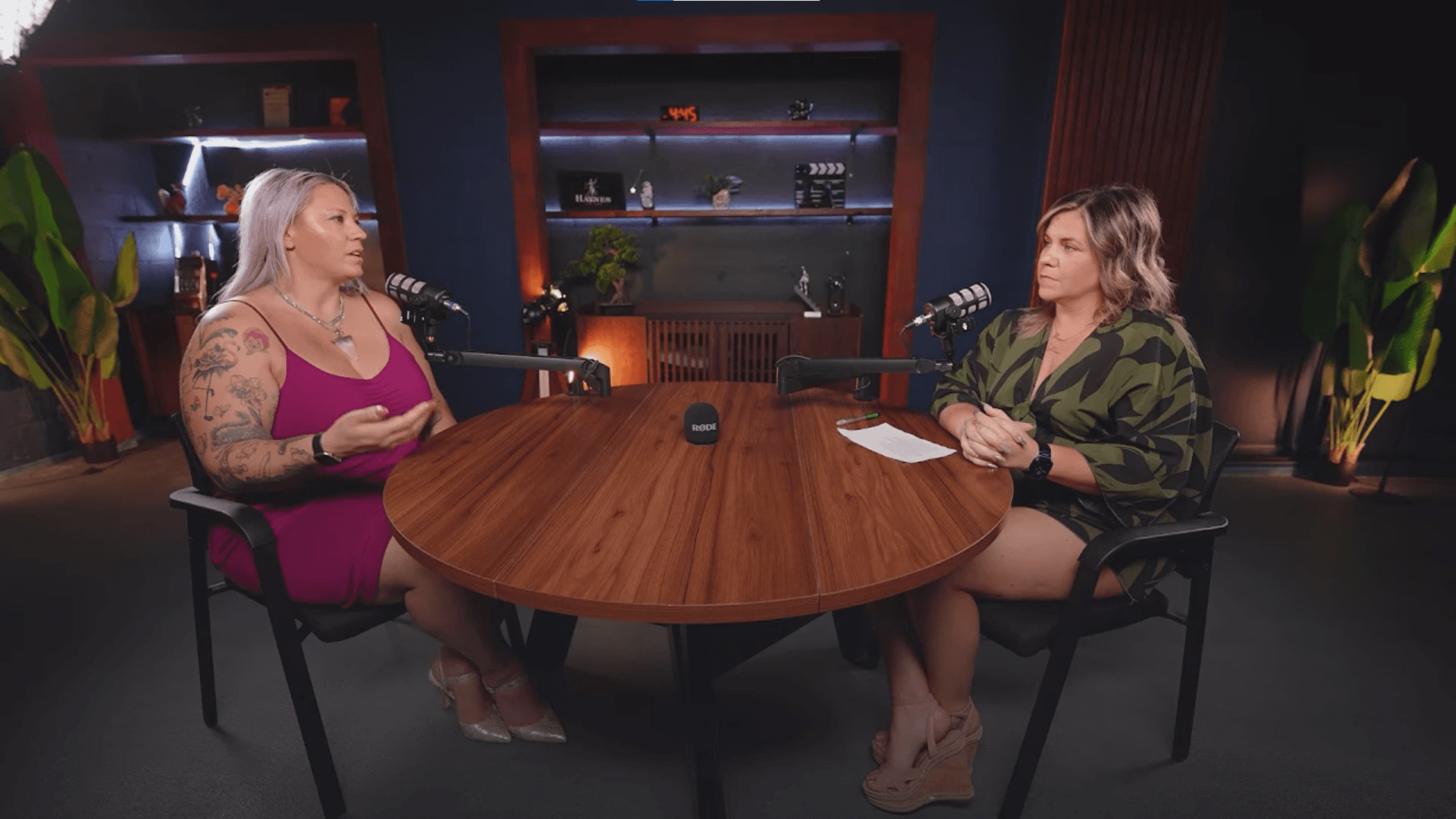
In person interviews are the clearest case. Recording two or three people in the same room requires multiple microphones, proper isolation and someone monitoring levels while the conversation happens. This is difficult to do alone and very obvious when it goes wrong.
Video changes things immediately. Multi camera video requires lighting, framing, camera operation and synchronisation, and a business owner cannot do that while also conducting a good interview. They are conversations. Someone mentions they listened. A guest introduces you to another guest. A prospect on a sales call says they heard the episode about a specific topic.
Client facing content raises the bar as well. If a prospect will judge your business by the production quality, the calculation changes.
And batching is far easier in a studio. Recording four episodes in one booked session is straightforward with an engineer and awkward when you are also the producer. Businesses appearing on established Inland Empire business shows often discover this simply by seeing how a proper session runs.Guest relationships are the most underrated output of this period. If you interview two local business owners a month, that is twenty four meaningful relationships a year with people who now have a reason to think well of you.
The Cost People Forget to Count
DIY looks cheaper because the equipment cost is visible and the labour cost is not.This is when a well run show starts producing what most people were expecting from month two.
Count the hours. Setting up, testing levels, re recording sections that failed, editing out the noise, and troubleshooting technical problems. For most business owners those hours are worth considerably more than the studio fee they were avoiding.
There is also an opportunity cost that rarely gets discussed. Time spent learning audio editing is time not spent on the business, and the skill has limited value elsewhere.
The honest question is not which is cheaper. It is which produces a show that still exists in six months.Businesses that quit at month four never reach this, which is why so many company podcasts have eight episodes and a two year gap.
A Reasonable Middle Path
Many businesses land on a hybrid and it works well.Download counts are the vanity metric of this channel. A local show reaching a few hundred relevant people can be worth more than a general show reaching thousands.
Record in a studio, because recording is the part that cannot be fixed afterwards. Handle the low skill downstream work internally if you have someone to do it.
Or start DIY deliberately, with the understanding that you are testing the format rather than building the finished product. If the show survives ten episodes and generates real conversations, upgrade then.Track guest outcomes. Referrals, partnerships and introductions that originated from an interview are real business value and rarely get attributed.
What does not work is buying progressively more equipment to solve a room problem, which is the most common pattern and the most expensive one.
How to Decide This Week
Record a five minute test in the room you intend to use. Listen on a phone speaker and in a car, not on good headphones.
If it sounds acceptable, treat the room further and start. If it sounds hollow, echoing or noisy and soft furnishings do not fix it, the room is the constraint and no purchase will change that.Distribution discipline matters more than production quality. An episode published and then promoted across email, social and search will outperform a better produced episode that was simply uploaded.
Then ask whether you will genuinely do the editing every single week. If the answer is uncertain, that is your answer.Choosing guests strategically shortens it as well. Interviewing people whose audience overlaps yours brings their listeners with them.
Listening to how established local shows are produced is a useful benchmark, and the Inland Empire business podcast archive gives you a sense of what a consistent standard sounds like over a run of episodes.
If you want to build a podcast channel that sounds professional, grows consistently, and works as a long term marketing asset, get in touch with Parrotslabmedia and start building something that lasts.
FAQs
01
Is a home podcast setup good enough for a business podcast?
For solo recording and remote interviews, frequently yes, provided the room is treated with soft furnishings and background noise is controlled. In person multi person interviews and video content are where home setups typically fall short of a publishable standard.
02
What matters more, the microphone or the room?
The room, by a significant margin. A modest microphone in an acoustically treated space produces better results than an expensive microphone in a bare room. Echo and background noise cannot be fully removed in editing, whereas microphone limitations are largely inaudible to listeners.
03
How much does podcast studio time cost?
Pricing varies with session length, number of participants and whether video is included. Audio only sessions cost considerably less than multi camera video. Package rates covering several episodes usually work out cheaper per episode than booking individually.
04
Can I record a podcast on my phone?
You can, and for testing a format it is a reasonable starting point. The limitation is the built in microphone, which picks up room noise heavily. Adding an external microphone improves the result more than upgrading the phone would.
05